

Where Did Narrowboats Originate? A Brief History of Their Origins
Narrowboats are a staple of the British canal network, but where did they originate? The answer to this question is not straightforward, as narrowboats have a complex history that spans hundreds of years and several different countries.
One theory suggests that narrowboats were first developed in the 18th century in the Staffordshire region of England. The area was known for its coal mines, and narrowboats were used to transport coal from the mines to other parts of the country. These early narrowboats were typically horse-drawn and had a distinctive long, narrow shape that allowed them to navigate the narrow canals of the time.
Another theory suggests that narrowboats actually originated in the Netherlands, where they were used to transport goods along the country’s many canals. Dutch narrowboats were similar in shape to their English counterparts, but they were typically wider and shorter. It’s possible that Dutch narrowboats influenced the development of the English narrowboat, as the two countries had a long history of trade and cultural exchange.
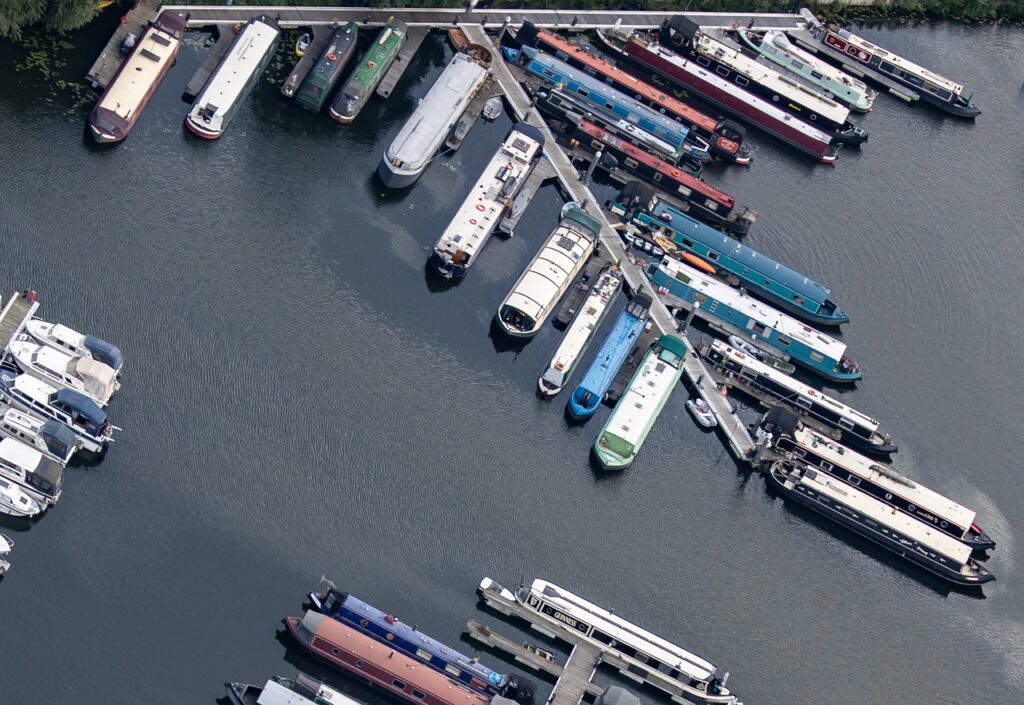
Origins of Narrowboats
Roman Era
The origins of narrowboats date back to the Roman era when they were used for transporting goods along the canals. These boats were smaller in size and had a flat bottom, which made them ideal for navigating the shallow waters of the canals. The boats were made of wood and were propelled by either oars or poles.
Industrial Revolution
During the Industrial Revolution, the demand for transportation of goods increased, and narrowboats became an important means of transportation. The wooden boats were replaced by steel-hulled boats, which were more durable and could carry heavier loads. The boats were also fitted with steam engines, which made them more efficient and faster.
The maximum length of narrowboats was restricted to 70 feet to ensure that they could navigate through the narrow canals. The freeboard of the narrow boats was also kept low to avoid getting stuck under the low bridges. The boats were also fitted with a keel, which helped to keep them stable in the water.
In conclusion, the origins of narrowboats can be traced back to the Roman era, where they were used for transporting goods along the canals. During the Industrial Revolution, the boats were replaced by steel-hulled boats, which were more durable and efficient. The maximum length of the boats was restricted to 70 feet, and the freeboard was kept low to ensure that the boats could navigate through the narrow canals.
Narrowboats in Commercial Traffic
Transport of Goods
Narrowboats have played a significant role in commercial traffic on canals since the 18th century. These boats were primarily used to transport goods such as coal, iron, and other heavy materials. Narrow boats were designed to be long, narrow, and flat-bottomed, which made them ideal for navigating the narrow canals and locks.
One of the most significant advantages of narrowboats was their ability to carry large quantities of goods. The boats were typically around 70 feet long and 7 feet wide, which allowed them to carry up to 30 tons of cargo. The boats were also designed to be low, which meant that they could pass under low bridges and tunnels.
Operating Pattern
The operating pattern of narrowboats was also unique. The boats were typically pulled by horses, which were guided by a crew member using a tiller. The crew member would stand at the back of the boat and steer it through the canals.
The boats would travel at a slow pace, usually around 2 to 3 miles per hour. This slow pace allowed the crew to navigate the narrow canals and locks safely. The boats would also stop frequently to load and unload cargo at various locations along the canal.
The Grand Union Canal was one of the most important canals for narrowboat traffic in the UK. This canal was built in the late 18th century and connected London to Birmingham. The canal was used extensively for transporting goods such as coal, iron, and other heavy materials.
In conclusion, narrow boats played a significant role in commercial traffic on canals in the UK. These boats were designed to transport large quantities of goods and were operated by a crew member using a tiller. The boats were pulled by horses and traveled at a slow pace, which allowed them to navigate the narrow canals and locks safely.
Narrowboats for Leisure Boating
Cruising
Narrowboats have become increasingly popular for leisure boating in recent years. They are an excellent option for those who want to explore the UK’s waterways and enjoy a slower pace of life. Narrowboats are perfect for cruising as they are designed to navigate the narrow canals and rivers. They are also licensed boats, which means they can be used for extended periods of time.
Long-Distance
For those who want to explore the waterways for an extended period, narrow boats are an excellent choice. They have everything you need to live comfortably on board, including a kitchen, bathroom, and sleeping area. Some people even choose to live on their narrowboats full-time, as they offer a unique and peaceful way of life.
Fixtures and Fittings
Narrowboats are available in a range of configurations, including traditional stern, cruiser stern, and semi-traditional stern. They are also often decorated with roses and castles, which is a traditional style of canal boat art. The rear steering deck is a popular feature of narrow boats, as it provides a great vantage point for navigating the waterways.
When it comes to fixtures and fittings, narrowboats are incredibly versatile. They can be fitted out with everything from wood-burning stoves to modern appliances, depending on your preferences. Many narrow boats also have solar panels, which provide a sustainable source of energy.
Overall, narrowboats are an excellent option for those who want to explore the UK’s waterways and enjoy a slower pace of life. They are licensed boats that offer all the comforts of home, making them an ideal choice for long-distance cruising. With a range of fixtures and fittings available, narrow boats can be customized to suit your needs and preferences.
Narrowboats as Permanent Residences
Narrowboats have been used as permanent residences for many years. They were originally designed as working boats for transporting cargo along the canals and waterways of Britain. However, over time, people began to see the potential of these boats as homes. Today, many people choose to live on narrowboats as a way of life, enjoying the freedom and flexibility that comes with this lifestyle.
Homes
Narrowboats make excellent homes. They are compact and efficient, with every inch of space carefully utilised. The interior of a narrowboat is designed to maximise storage and living space, with cleverly designed furniture and fixtures. Many people who choose to live on narrowboats are attracted to the simplicity of this lifestyle, and the ability to live in a small space with minimal possessions.
Camping Boats
Narrowboats are also popular as camping boats. These boats are designed to be used for short breaks and holidays, and are often rented out to holidaymakers. They are equipped with all the necessary amenities, including a kitchen, bathroom, and sleeping area. Camping boats are a great way to explore the canals and waterways of Britain, and to experience life on the water.
Hotel Boats
Hotel boats are another popular use for narrowboats. These boats are operated as floating hotels, offering accommodation and meals to guests as they travel along the canals and waterways. Hotel boats are a great way to experience the beauty of the British countryside, and to enjoy a unique and memorable holiday.
In conclusion, narrowboats have a rich history as working boats, but they have also become popular as permanent residences, camping boats, and hotel boats. They offer a unique and flexible way of life, and are a great way to explore the canals and waterways of Britain.
Narrowboats Today
Canal and River Trust
The Canal and River Trust is a charity organization that oversees the maintenance and operation of the majority of the inland waterways in England and Wales. They are responsible for ensuring that the canals and rivers remain navigable and accessible to the public. Narrow boats play a crucial role in this system, as they are ideally suited to the narrow and winding waterways that make up the canal system.
The Trust also provides a range of services to narrow boat owners, including mooring facilities, water points, and pump-out stations. They also offer training courses for those who wish to learn how to operate a narrow boat safely and efficiently.
Scottish Canals
In Scotland, the waterways are managed by Scottish Canals, a public corporation that is responsible for the operation and maintenance of the country’s canals and waterways. Narrow boats are a common sight on the Scottish canals, particularly the Caledonian Canal, which runs from the east to the west coast of Scotland.
Scottish Canals also provides a range of services to narrowboat owners, including mooring facilities, water points, and pump-out stations. They also offer training courses for those who wish to learn how to operate a narrow boat safely and efficiently.
Narrow boats are a popular choice for pleasure boating on both the English and Scottish canals. They are successful and efficient, offering a comfortable and affordable way to explore the waterways. Many narrowboats are now fitted with motors or diesel engines, which make them easier to operate and more reliable than the traditional sail-powered boats.
Overall, narrowboats continue to play an important role in the canal system, offering a unique and enjoyable way to explore the waterways of England and Scotland.
